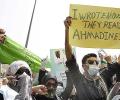
State television quoted Khamenei directing the Guardian Council to look into charges by Ahmadinejad's rival and pro-reform candidate Mir Hossein Mousavi.

The Central Board of Secondary Education (CBSE) has postponed the class 10 and 12 board exams scheduled for March 5 in the Middle East region due to the ongoing Iran-Israel conflict.

Amidst escalating tensions in West Asia, India voices strong concerns over the safety of its nationals and the potential disruption to energy supplies, urging dialogue and diplomacy for a swift resolution.
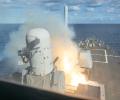
In a coordinated military operation, the United States and Israel launched airstrikes against Iran, escalating tensions amid stalled nuclear talks and claims of resumed nuclear activities, resulting in the death of Iran's supreme leader.

Iranian President Masoud Pezeshkian has confirmed Tehran's participation in Pakistan-facilitated peace talks with the US in Islamabad, according to Prime Minister Shehbaz Sharif. This development follows a conditional ceasefire agreement and aims to address regional tensions.

The advisory follows recent developments, including Israeli airstrikes targeting central and western Iran.

Pakistan capital Islamabad is emerging as the leading venue for the next round of technical negotiations between the US and Iran, a media report said Sunday.

US President Donald Trump announced a finalised peace deal between the US and Iran, set for signing on June 19 in Switzerland, with key figures like J D Vance, Steve Witkoff, and Jared Kushner from the US side, and Abbas Araghchi and Mohammad Bagher Ghalibaf representing Iran, alongside Pakistani mediators Field Marshal Asim Munir, Shehbaz Sharif, Ishaq Dar, and Mohsin Naqvi, playing crucial roles in the diplomatic breakthrough.

India is navigating a complex diplomatic landscape, attempting to balance its 'forever honeymoon' with the Israel-UAE-Bahrain axis against its historical ties with Iran, as evidenced by recent high-level visits and evolving geopolitical realignments in the Middle East, observes Ambassador M K Bhadrakumar.

The Natanz nuclear facility is one of Iran's key nuclear installations and has previously been at the centre of international concerns over Tehran's nuclear programme.

As days turn into weeks and America loses more planes, as the destruction of trillions of dollars worth military assets piles up, and dead bodies of soldiers return in ever greater numbers in coffins, Trump will have to answer some very difficult questions to save his presidency, notes Ambassador M K Bhadrakumar.

Trump said that the strait will be "open very soon" if ongoing negotiations with Tehran continue successfully.

US President Donald Trump has claimed that Iran has accepted "just about everything" the United States has demanded in ongoing indirect nuclear negotiations, particularly regarding denuclearisation. He also asserted that American forces repeatedly carried out military strikes that crippled Tehran's military infrastructure, including radar installations, and escorted commercial oil tankers through the Strait of Hormuz. Trump dismissed reports of Iran's strength, stating its military and economy were severely weakened.

The Cabinet Committee on Security (CCS) has reviewed the evolving situation in West Asia, directing departments to assist Indian nationals affected by recent developments and emphasizing the need for dialogue and diplomacy.

The harsh truth is that the US is no longer a reliable partner, cautions Ramesh Menon.

Pakistan Prime Minister Shehbaz Sharif clarified that the recent Memorandum of Understanding (MoU) signed between the US and Iran does not include provisions regarding Tehran's ballistic missile programme. This statement followed talks with Iranian President Masoud Pezeshkian, with Sharif emphasising Iran's right to its defence capabilities and Pakistan's role as a mediator in the US-Iran peace process.

Russian President Vladimir Putin has offered his support to help bring peace to West Asia, praising the Iranian people for their resilience. This comes as Iran seeks to resolve the conflict with the US, following discussions with Pakistani and Omani leadership.

Lieutenant Governor Manoj Sinha reviewed the security situation in Jammu and Kashmir in a meeting with top security officials following protests against the killing of Iran's Supreme Leader Ayatollah Ali Khamenei.

The West Asia conflict escalated sharply as Iran launched missiles towards Israel, while Tehran confirmed the killing of its intelligence minister in Israeli strikes, marking the third assassination of a senior Iranian official in two days.

Educational institutions in Kashmir reopened on Monday after a week-long closure due to protests over the death of Iran's Supreme Leader Ayatollah Ali Khamenei.
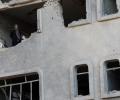
A spokesperson for the Central Khatam al-Anbiya Headquarters said that Iran's armed forces are prepared to intensify their response if aggression continues.

Pakistan is set to host the foreign ministers of Saudi Arabia, Egypt, and Turkiye to discuss a range of issues, including de-escalating tensions in West Asia.

Over the weekend, one senior US official told CNN, the Israelis had an opportunity to kill Iran's supreme leader.

The United States military has intercepted and destroyed two Iranian attack drones that posed an immediate hazard to commercial shipping lanes in the Strait of Hormuz, according to an official statement by the US Central Command late Saturday.

Prime Minister Narendra Modi spoke with leaders from Oman, Kuwait, and Qatar, expressing concern over attacks in West Asia and discussing the safety of the Indian community.

Shiromani Akali Dal president Sukhbir Singh Badal and Punjab Vidhan Sabha Speaker Kultar Singh Sandhwan have appealed to Prime Minister Narendra Modi to take urgent steps for the evacuation of Indian citizens stuck in countries affected by the recent joint Israel-US attack on Iran.

Joe Kent, former head of the National Counterterrorism Center, accuses Israel of instigating the conflict between the United States and Iran, claiming there was no imminent threat from Iran.

There is no cause for concern, as the overall situation arising out of the crisis is firmly under control, the Centre informed while briefing political parties at the all-party meet.

The Iranian leader talked about what he described as "suffering" of Muslims in Gaza, Myanmar and India.

Protests erupted in Jammu and Kashmir following events in Iran, leading to heightened security measures and appeals for peace.

Iran has reimposed restrictions on the Strait of Hormuz, with its forces opening fire on a passing tanker and forcing at least two Indian vessels to reverse course, escalating tensions in the region and raising concerns over energy supplies.

A source familiar with US Treasury Secretary Scott Bessent's thinking revealed on Saturday that the department "intends to utilise all available authorities to make Iranian assets accessible for rebuilding and repair efforts related to any future damage inflicted by Iran."

The United States conducted retaliatory strikes against Iran, targeting over 80 sites, after accusing Tehran of attacking commercial vessels in the Strait of Hormuz, while Iran condemned the US decision to revoke a temporary suspension of sanctions on Iranian oil sales.

Expanding the scope of hostilities, Zayed Port in Abu Dhabi, United Arab Emirates, was also targeted by missile strikes launched by Iran, according to a report by the Iranian state broadcaster, Press TV.
National Conference President Farooq Abdullah has voiced his concern over the escalating violence in West Asia, urging all parties to prioritise dialogue and diplomacy to de-escalate tensions and protect civilian lives.

Peaceful demonstrations were held in several Shia-dominated areas of Kashmir in support of Iran, following congregational prayers on Friday. Protesters voiced their support for Iran and condemned the US and Israel.

US President Donald Trump has abruptly withdrawn from a peace deal with Iran, citing fresh intelligence of Iranian assaults on commercial vessels in the Strait of Hormuz. The decision, made just a fortnight after celebrating the deal, has led to a significant military escalation in the region, with the US launching extensive counter-operations against Iranian military infrastructure.
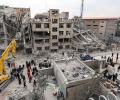
The call came before Iran's new supreme leader Mojtaba Khamenei vowed vengeance and urged citizens to continue their fight against the attacks by US and Israel.
Precious metal prices surged in futures trading, with silver hitting Rs 2.93 lakh per kg and gold nearing Rs 1.68 lakh per 10 grams, driven by safe-haven demand following US-Israel strikes in Iran and retaliatory attacks.

Tensions in West Asia have dramatically escalated as Israel launched targeted military operations against Iran, triggering widespread blasts across strategic cities, following earlier Iranian projectile attacks on Israel.
